Friday, April 12, 2013

Big women onstage: bold and boring?


As is my ritual every Tuesday night, tonight I sat down with a glass of wine to enjoy my favorite television show right now: Smash. For those of you who have never seen nor heard of the show, all you need to know is this: the show centers around the process of making a Broadway show—from the writing, to the directing, to the rehearsal and so on, until the opening of the show on Broadway. It focuses on two girls, fighting for the lead role, in this case, the role of Marilyn Monroe. While I love the show for theatre aspects and the snazzy musical numbers, I can’t help but feel a little saddened every time I watch the show. The girls on my TV screen are those who I strive to be, not only because I envy their talent but also because they are both so beautiful.  But week after week as I watch Karen and Ivy fight to be strong woman in the theatre world, I look at myself and can’t help but compare. If two women like this can’t make it (and I’m certain that the show is strongly dramatized and over exaggerated) can I, as a bigger girl succeed in my dream?

I recently read a pretty powerful article featured on the guardian’s website about the role of bigger women onstage. While this was no more than a critic piece, what the author said was inspiring. It spoke to me as a girl who feels hopeful and lost in the world of size 2, blonde actresses. Throughout my college career alone I have been pegged as many things due to my weight: the funny friend, the caring mother, and the bitchy Alpo-eating girlfriend. I see actresses like Melissa McCarthy shine in the comedic roles she is given, always the same. But very little are women like McCarthy recognized because of their true acting talent. Especially in an age demographic of younger people, being overweight is not seen as a positive trait, and if you are lucky enough to make it onstage or in movies, those people fight constantly to break out of it.

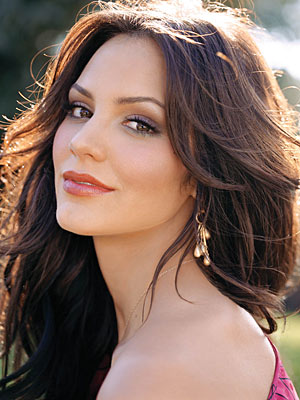
So I guess what I’m saying is, who are the true role models in the world of the rich and famous? Should aspiring actors and actresses look up to people like Megan Hilty or Katherine Mcphee, who are both extraordinarily talented (and know it!) but who use the way they look so often in Smash to get ahead? Or should we be looking up to girls who are confident in himself or herself, such as Melissa McCarthy or Octavia Spencer or even Rebel Wilson, who are also talented, and use that to be successful? Not only that, but are shows like this one teaching us that in order to be successful we need to “sleep our way to the top”? As someone who is passionate about theatre, I am also passionate about how to break the stereotypes we are put into, and fighting against this pre-conceived notion of what you need to look like or do in order to get ahead. I hope that when you watch shows that are about sex appeal and the way women look, you realize that this is superficial and not how real life should be. Let’s recognize those for their true talents, no matter the age, or weight. I’m a big actress, and I am proud of it. 

Monday, February 25, 2013

What's your "reason"?


Define “pretty”. Such an obscure question, with different meanings for different people. When I was asked this question at the beginning of the semester, I would never have been able to answer. How do you make an adjective such a tangible thing? And what is the one “true” definition? Is it about looks, or can it be a state of mind? Does pretty encompass a great deal of traits that a person has, or is it determined based on hair color or face qualities?

You don’t need to have a definite answer right now, nor may you ever have an answer (I’m not sure I will). But I wanted you to start thinking. Who determines what pretty is? Media? Those we grew up with? Men? Ourselves? In true theatre form, and in my efforts to keep this blog based on my life as a woman actress, I had to answer all of these questions and more to find a much more deeper meaning for a play I’m doing. In January I began working on a show called “reasons to be pretty” which centers around this very issue. The show centers around couple Steph and Greg who have been together for 4 years, but break up when Greg compares Steph to a girl he works with calling her “regular” and the new girl “pretty.” Greg is also friends with Kent, a total skeezeball, who thinks that pretty is only based on looks, and encourages Greg to leave Steph because she is not “pretty.” Through arguments and real-life situations, Greg and Steph discover what pretty means to them and how we achieve happiness based on that. I was originally drawn to the script, and actually proposed it as my senior capstone this year, because it was so honest; the story and situations are so true to real life that everyone can relate. It also made me pose the question: What is pretty and what is my reason to be pretty?
 
Through both extensive research and rehearsal the 4 person cast has discovered a few things about the word pretty. So many people think that pretty is simply based on how you dress, or your hair, or how you do your makeup, but I believe it is so much more than that. I think that to be pretty, you need to have a pretty soul: good intentions, morals and the willingness to help people in need. What’s more, you need to be confident: to me that radiates pretty more than anything. So no, pretty is not just based on the outside, it starts from inside more than anything.

I believe this is such a relevant topic always. We are always struggling to be what others expect of us, and we are constantly changing ourselves to fit into the media and construed ideas of “pretty” or “sexy” or “beautiful.” This play really hits home for me because after working on it for awhile, I realize how more and more I was the main character Steph: one comment based on my looks can set me off because I just want to fit into that pretty stereotype. Now, I know that pretty can mean a lot of different things, and I’m not sure if I will ever be able to define it fully. So stop worrying about what you look like, but instead focus on who you are, how you feel about yourself and the pretty soul you have. Remember that not everyone’s idea of pretty is the same, and that’s okay, but we must love and accept ourselves. I encourage you to answer the question
“What’s your reason to be pretty?” Mine is to be happy. Because if I feel pretty (inside or out) based on my idea of what pretty means, then I feel happy.

I also encourage all of you, theatre people or not to come see “reasons to be pretty” March 7, 8, 9 in the PAC Black Box Theatre. I think that being a feminist or someone who can appreciate the beauty of human life will make you understand and enjoy the overall message of the play more. Not only that, but you can test your theory of your “reason to be pretty.” 

Wednesday, January 30, 2013

Actors, playwrights and feminists, oh my!


So, where do I begin? I have never been good at writing in a blog, perhaps due to lack of motivation, time or interesting topics, but I always try to start one and it never works out. So when I began thinking about what I wanted my first blog post to be on, I struggled. How do I write about something in my life that I am so passionate about, using both Women’s and Gender Studies as well as activism? I can barely do two out of the three in that equation. However, as Julie Andrews once said (and yes, as a theatre major, it’s a must that I quote musical celebs), “let’s start at the very beginning, it’s a very good place to start.” I don’t feel that I can write about anything, activist filled or not, without telling you about myself and where I come from in life. Being an only child in a fatherless family, I have learned independence as well as women’s strength at a young age. My mother worked three jobs to pay the rent and is still to this day, the strongest woman I know. It makes sense then that from a young age, I could consider myself a feminist and an activist for women’s rights. Now that I am older and have seen the world more, I realize how much of an activist for human’s rights I am, and now consider myself a humanist more than necessarily a feminist.

            While I continue to follow my dream of being a successful actress, I have noticed the unfairness this profession is to female actors. After being assigned this first blog assignment, I now have the desire to spread the awareness of this problem throughout different mediums. First, identifying and knowing the problem exists is a huge step. I notice as I continue to go to more auditions, that directors tend to favor men and their work more than women. Men and women are stereotyped into certain groups based on how they look, women more so than men. Much of my experience has been with how I look for the part, not necessarily based on my talent or ability. With men, while much of it is still based on looks, they are considered based on their talents more so, because they can be altered to fit the role. Why is that not possible with women? Also in auditions and readings of scripts, men tend to have more parts available to them as well as more lines in general.

            For those that have never taken the time to open a script this problem might not seem like a big deal. Many people are not aware of the problems women face within the actual text of a given play or work. First, before we even hit the lines or “meat and potatoes” of the story, women are “judged” based on how they look. Where the characters are listed often gives descriptions of the characters (so you can appropriately cast the play) HOWEVER, the men are often described by their age and personality traits—example: “Mid 30 year old man, smart, witty, hard-working bank teller”, while the women’s characteristics are described by how they look—example: “20 year old women, tall, pretty, dresses well.” Why is this? Why are women based on HOW they look, versus how they act? Does it not matter to playwrights as much? Even though most of these stereotypes are out of an actress’ control, playwrights need to take note of them playing in favor of men.

            When you get into the actual story of a play, women often have fewer lines compared to men. In general, their dialogue is often “stereotypical” and women take on roles such as bitchy girlfriend, teacher, mother or other “caring” roles. As an actress, it can often be hard for me to find roles that I really recognize with. As I advance my range of play knowledge, I am beginning to find many women playwrights who are activists within their work. Eve Ensler, who is a huge advocate for feminism all around, has written phenomenal plays about and involving strong women characters. I find myself really interested in this kind of work and even though college doesn’t allow me to do it as much as I like, I have been introduced to it and hope to continue to work with it and possibly write some of my own in the future.

            Okay, so long schpeal, right? But I didn’t think that I could justify writing about feminism and activism without telling you where I was coming from and why I wanted to take this class in the first place. To be an advocate for the arts (1.) and to begin creating a discussion about how we move on from here, either through myself or through other mediums (2.) Women have been fighting for their rights in general for a long time, as well as recently fighting for their place in the arts. Lets continue that fight. Also, I have included some links for you, about Eve, about feminist theatre and about the arts in general. Look at it, get educated and understand where I’m coming from.

The first link is all about a great activist writer, whom I mentioned earlier, Eve Ensler. This site lets you know all about Eve and what she is doing right now. I love this site because it links you to her blog, facebook, twitter and other mediums to keep up with her. I check this daily. It’s great.


This site (or better labeled journal article) talks about the history of modern feminist theatre. If you don’t know about anything about theatre, or more specifically feminist theatre, this is a fantastic, easy read article!

This is another great article about feminist theatre, but from a feminist’s point of view. It’s so powerful and moving, and this is actually one of the first articles I read. I think that if you are an advocate for both feminism and theatre, you will enjoy this article.